
Musk predicts a neocloud shakeout. Why AI demand will not save every provider
GPU rental prices are rising, yet providers face construction delays and funding risks. A closer look at Musk’s warning, IEA data and SpaceX’s $40 billion deal.
Elon Musk expects a wave of failures and consolidation among companies that rent out computing capacity for AI. His argument: buying GPUs is only one step. Building a data center, connecting it to the grid and securing financing can take longer than expected. Some providers will run out of money before customers start paying.
The discussion began with an unnamed AI lab’s backup plan: if its own model failed to become the best, it could make money reselling GPU capacity it had rented early.
If the model fails, there is still GPU rental
On October 24, 2026, Yuchen Jin recounted a conversation with a friend at a new AI lab. The team had locked in compute capacity early. According to the friend, rental prices for H100, B200 and B300 GPUs had since risen two to three times.
“We can just resell the compute and print money.”
— Yuchen Jin’s unnamed friend, as quoted by Jin.
Jin’s closing remark was ironic: the model developer had found a business as a compute middleman. He did not identify the lab or disclose its contracts, so the reported price increase cannot be treated as a market-wide measure.
On October 25, Musk replied to Jin:
“I think we’re going to see a lot of stranded compute in partially complete data centers”
— Elon Musk, post on X.
Reselling access depends on the supplier getting its equipment online in time. Until then, even expensive GPUs generate no rental revenue.
Buying GPUs does not get them connected
Neoclouds are specialized cloud companies that rent out capacity for training and running AI models. They provide GPUs, high-speed connections between them and software to manage the computing resources. Customers avoid buying servers and setting up their own facilities.
The provider still needs a building, cooling and electricity. If construction or the grid connection slips, the customer waits for access while the owner has already committed money to equipment. Demand for the service remains, but the provider cannot earn revenue on schedule.
The International Energy Agency has assessed the scale of this problem. Its 2025 Energy and AI report warns that grid constraints could delay around 20% of global data center capacity planned for construction by 2030. The analysis considered the locations of future facilities, grid congestion and connection timelines.
That estimate describes a risk of delays. It does not establish how many GPUs are already sitting idle. It does explain how customers can face a shortage of compute while suppliers have equipment they cannot use: capacity must be available in a particular place at a particular time.
A working server can still earn too little
Later that day, Chamath Palihapitiya joined the discussion. He disclosed his position: he owns a portfolio of energized land, one of the resources needed to build data centers.
In his assessment, neoclouds are disorganized and poorly capitalized, although some are in a better position than others. The largest cloud providers have money but negotiate slowly. He cited three months to complete a nondisclosure agreement and demands for 18-month escrow periods. His own business, he said, had won land deals by offering speed and simpler terms. This is a participant’s account of transactions; he supplied no data on average negotiation times across the market.
Palihapitiya expects construction delays to catch the market off guard in 2027. His definition of stranded compute also includes equipment that is running but earning less than its total cost of capital. Servers can be busy and customers can be paying, yet returns can still fall short of justifying the investment.
He expects the beneficiaries to be companies that can build at industrial scale quickly, along with well-capitalized suppliers serving them.
Musk warns of a credit squeeze without market-wide borrowing data
In his reply to Palihapitiya, Musk said debt markets had almost entirely cut off funding over the preceding few weeks for companies without substantial revenue outside AI data centers. He predicted failures and consolidation among more than 200 neoclouds:
“Some will make it through, but not many.”
— Elon Musk, post on X.
Musk is a buyer of computing infrastructure himself. His post includes no list of those companies, calculation of likely failures or borrowing statistics. The claim that lending has almost stopped needs separate evidence.
Recent transactions show that capital had been flowing into the sector:
- On September 22, CoreWeave issued notes totaling $4.2 billion, with a 2.875% coupon and maturity in 2033.
- On August 24, Nebius closed an offering of $5.75 billion. Its intended uses included data centers and GPUs.
Both deals predate the recent weeks Musk referred to. They do not rule out tighter conditions in October, but neither do they establish that the whole sector has lost access to capital. Both were convertible note offerings: the option to convert into equity distinguishes them from ordinary loans. A low coupon on such an issue says nothing about the availability of cheap borrowing for other companies.
SpaceX has a $40 billion commitment, with deliveries still ahead
Musk contrasted neoclouds with SpaceX, which he said had already closed $40 billion in debt financing for GPUs. He pointed to its investment-grade credit rating and revenue from Starlink and launches as advantages.
The rating is verifiable: Fitch assigned SpaceX a BBB+ rating on June 18, 2026. That is investment grade. The company’s documents, however, describe a different transaction status from Musk’s use of “closed.”
On October 26, SpaceX announced a binding commitment to enter into an approximately $40 billion finance lease for GPUs and related equipment with an Apollo-managed entity. Financing participants include Goldman Sachs, BlackRock and capital accounts advised by KKR. Closing is expected before the end of 2026 and remains subject to specified conditions.
According to SpaceX’s SEC filing, the binding commitment letter was signed on October 24. The lessor will buy the equipment and lease it to SpaceX in tranches. The company expects the leases to begin following deliveries in the first half of 2027.
That commitment does not mean SpaceX has received $40 billion in cash or brought the equipment online. Financing helps it wait for deliveries, but the closing and deployment schedules remain part of the risk.
Demand can grow while independent providers disappear
On October 14, Gartner published a forecast that more than 80% of neocloud providers would cease independent operations by 2030. It cited cost pressure and a lack of differentiated business models. Some companies could become part of other groups; losing independence does not necessarily mean bankruptcy.
Gartner also expects spending on AI-optimized cloud infrastructure to rise from $66 billion in 2027 to $174 billion in 2030. In its scenario, most providers would still earn too little to recover their investments before the current generation of AI chips is replaced.
Providers have reported evidence of demand: on September 17, CoreWeave said it was continuing to sign contracts for new capacity at higher prices. Those are one company’s sales, and cannot confirm a two- to threefold increase in rental prices across the market.
Stronger players could acquire weaker rivals’ customers and assets. The author of a Reddit discussion of the forecasts offered that reading too, while noting a constraint: buyers would also need capital.
The backup plan in Jin’s story works only if the rented capacity becomes available on time. A prospective provider must wait for a finished facility, connect the equipment and keep enough cash to survive until customer payments arrive. Growing AI demand alone does not solve those problems.
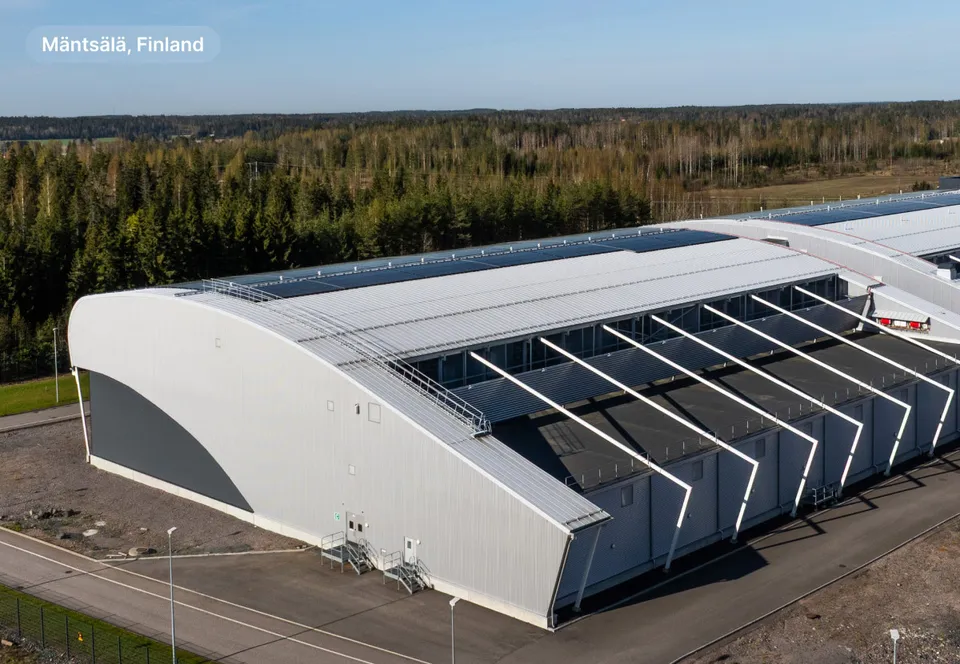
Cover photo: Nebius’s data center in Mäntsälä, Finland. Photo: Nebius.